

UC Davis Faculty Propose Climate Crisis General Education Requirement
A group of 13 UC Davis faculty is asking the campus to adopt a new General Education (GE) Requirement focused on the Climate Crisis. The faculty, from six of UC Davis’ 11 colleges and schools, submitted their proposal to the Academic Senate in early January. If approved, the new GE requirement could take effect for the incoming class of 2030.
Why is a new Climate Crisis GE requirement needed?
Our planet is deep in a climate emergency. Communities around the globe are seeing increasingly frequent and severe climate events, such as wildfires, droughts, heatwaves, and atmospheric rivers. The effects of these disasters are pervasive – mounting death tolls, damage to civic infrastructure, and disrupted supply chains, for instance – and leave our society vulnerable to public health emergencies, energy crises, food insecurity, and weakened economic and national security, among other threats. To better prepare students for this reality, UC Davis graduates should have a foundational understanding of the causes of the climate crisis, its social and economic consequences, and potential actions to mitigate the worst outcomes of the crisis.
There is a growing consensus among universities that students should be prepared to navigate the world as informed members of society and as professionals in fields that will be impacted by a dramatically shifting climate. Peer institutions, including Arizona State University, University of Minnesota, and campuses across the University of California and California State University systems have implemented or are considering climate change education requirements.
The requirement would be a bold action for UC Davis, including with the deliberate naming of the GE requirement as Climate Crisis. “The choice of ‘crisis’ was made to highlight the urgency of the issue and the multi-dimensional and interdisciplinary aspects of this complex, multi-generational, and global problem,” said Erwan Monier, Associate Professor of Climate Change Impacts in the Department of Land, Air and Water Resources and one of the authors of the Climate Crisis proposal. “The aim is to offer courses that not only teach our students about the science of climate change but also cover several of the many facets associated with this crisis, including social and economic consequences, existing and potential solutions, political and historical context, and disinformation surrounding the issue, to name a few.”
The proposed GE requirement also aligns with the University’s focus on Climate Solutions, one of the priority areas identified by UC Davis Grand Challenges as a major societal issue that the campus is uniquely positioned to address. Grand Challenges helps coordinate and mobilize campus resources to advance the University’s pursuit of solutions to the climate crisis, which includes educating an informed citizenry and climate-ready workforce. “We hope that providing insights to both our current students and our alumni on the climate crisis will be empowering,” said Paul Dodd, Associate Vice Chancellor of Grand Challenges. “Having a basic level of understanding of the origins of climate change and current status of our planetary health is a crucial first step in a call to action focused on climate solutions.”
What will a Climate Crisis GE requirement mean for students?
The submitted proposal asks for a one-course Climate Crisis GE requirement, beginning with undergraduates in the incoming class of 2030. If approved, the faculty would then consider a list of existing courses that can satisfy the requirement, as well as a list of courses to be adapted or created from scratch to meet the requirement. Tessa Hill, Professor in the Department of Earth and Planetary Sciences, Associate Vice Provost of Public Scholarship & Engagement, and another of the Climate Crisis proposal authors, believes the new requirement will incentivize new courses across campus to incorporate discussions of climate change, the climate crisis, and climate solutions. “Because climate change impacts so many aspects of our lives, many different disciplines on campus will be able to offer courses that address the crisis,” Hill said.
The current GE requirements for UC Davis include 52 credits in Topical Breadth to build general knowledge – these include courses in Arts & Humanities, Science & Engineering, and Social Sciences. There is also a 35-unit Core Literacy requirement covering literacy of words and images, civic and cultural literacy, and quantitative and scientific literacy. The Climate Crisis GE requirement would be added to the Core Literacy requirement, increasing that category by three units. To avoid undue burdens on students and increases in graduation time, special circumstances could allow the Climate Crisis courses to count towards another Core Literacy requirement.
What would a Climate Crisis course entail? Courses satisfying the proposed GE requirement would need to meet three criteria:
- A substantial focus on the climate crisis throughout the course,
- Coverage of multiple aspects of the climate crisis, such as the social and economic consequences of the crisis, and
- Discussion of the social and equity implications of the climate crisis.
There are at least 46 existing courses at UC Davis that already meet these criteria, promising a smooth rollout and numerous options for students to meet the requirement.
Adding the Climate Crisis GE Requirement is an important next step in helping UC Davis prepare students for a diverse and changing world. Since the campus was founded in 1908, courses, degree programs, and curricula have changed to match the evolution of disciplines with the latest information and technology. “Given the urgency of the ongoing climate crisis, the University’s dedication to research, teaching, and serving the public good warrants an immediate campus-wide update to its educational standards,” Dodd said. UC Davis students who are educated on the realities and consequences of our planet’s climate trajectory will contribute to an informed citizenry and trained workforce that can take the necessary steps to understand, survive, and respond to this crisis.




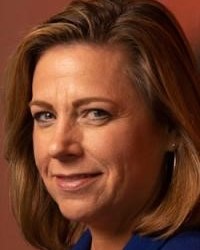 Jonna Mazet, DVM, MPVM, PhD, is the Vice Provost of Grand Challenges and the Chancellor’s Leadership Distinguished Professor of Epidemiology and Disease Ecology at the University of California, Davis, where she founded the One Health Institute. Prof. Mazet is active in global health problem-solving, especially for emerging infectious disease and conservation challenges. She was the Global Director of the viral emergence early warning project, PREDICT, developed with the US Agency for International Development’s (USAID) Emerging Pandemic Threats Program. An elected member of the US National Academy of Medicine, she also serves on the National Academies of Science, Engineering, and Medicine’s Forum on Microbial Threats, One Health Action Collaborative, and Standing Committee on Emerging Infectious Diseases and 21st Century Health Threats.
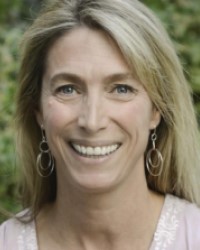 Christine Kreuder Johnson is Professor of Epidemiology and Ecosystem Health and Director of the EpiCenter for Disease Dynamics. Her work is committed to transdisciplinary research to characterize impacts of environmental change on animal and human health, inform preparedness for emerging threats, and guide public policy at the intersection of emerging disease and environmental health. Professor Johnson’s research has pioneered new approaches to characterization of emerging threats and disease dynamics at the animal-human interface in rapidly changing landscapes that constitute “fault lines” for disease emergence, disease spillover and subsequent spread.
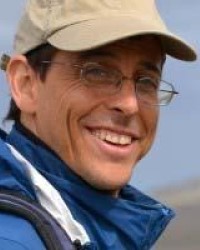 David Coil is the Public Health Coordinator at Student Health and Counseling Services at UC Davis. Over the last few years, David has worked on three aspects of pandemic response; helping set up and run the asymptomatic testing operation in Davis, working on methods for environmental surveillance of SARS-CoV-2, and helping coordinate genotyping/sequencing efforts to track viral variants. Prior to the pandemic, David was a lab manager responsible for supervising research projects in microbiology, microbial ecology, and genomics in the Eisen Lab. A significant portion of his previous efforts have been in science communication and outreach, including sending bacteria to the space station. David is the creator of “Gut Check: The Microbiome Game.” David received his PhD in 2005 from the Fred Hutchinson Cancer Research Center/University of Washington, working on retroviruses. Since then he has lectured at the UW, done a post-doc in Belgium working on Legionella, and helped direct a non-profit in Alaska called Ground Truth Trekking.
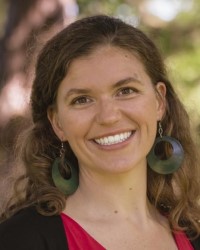 Heather Bischel is an Assistant Professor in the Department of Civil and Environmental Engineering at UC Davis. Bischel’s research aims to support public and environmental health through safe and effective water and wastewater management. In 2020, Bischel launched the wastewater-based disease surveillance program of Healthy Davis Together (HDT), a collaboration between the City of Davis and UC Davis to combat COVID-19. She is now working with partners UC Merced to expand wastewater monitoring in three counties through the Healthy Central Valley Together (HCVT) project. HCVT aims to increase health equity in wastewater surveillance in rural and underserved communities in California. UC Davis was designated a National Institutes of Health (NIH)-funded “Center of Excellence” for wastewater-based COVID-19 surveillance. Bischel recently began collaborating with researchers at UC Berkeley, UC San Francisco, and Lawrence Livermore National Laboratory on the Pandemic Readiness and Equity through Virus Epidemiology of Wastewater (PreVIEW) project. HDT’s wastewater-based epidemiology program’s overall success has earned national recognition, including mentions in WIRED, The Wall Street Journal, and The Washington Post.